Steelcase Job Cuts: Is it Panic or Good Management?
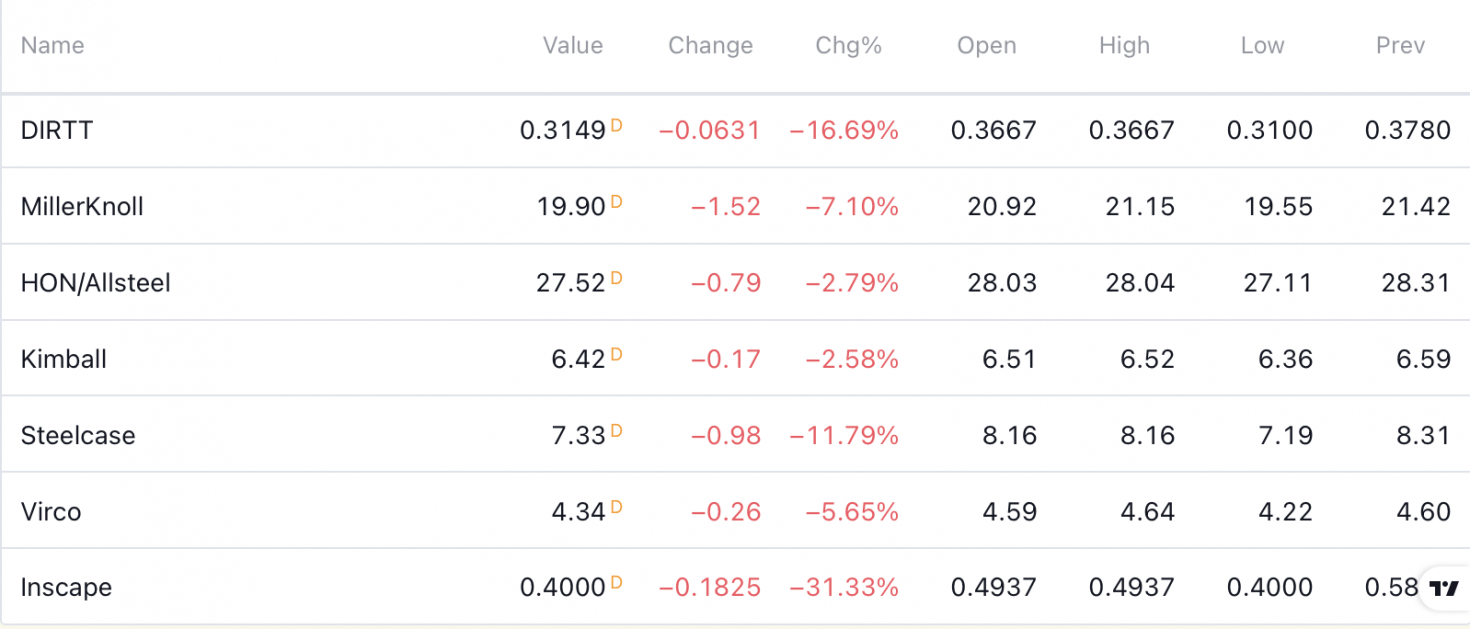
This week, the industry news was mostly about Big Dark Blue (or maybe just "Medium Dark Blue") - aka Steelcase, who reported quarterly results that resulted in a stock slide of biblical proportions. The company closed out trading on Friday at $7.33, down 11.79% - and that's after the company gave a pretty good explanation to investors for their diminished earnings (and increased sales) in the last quarter.
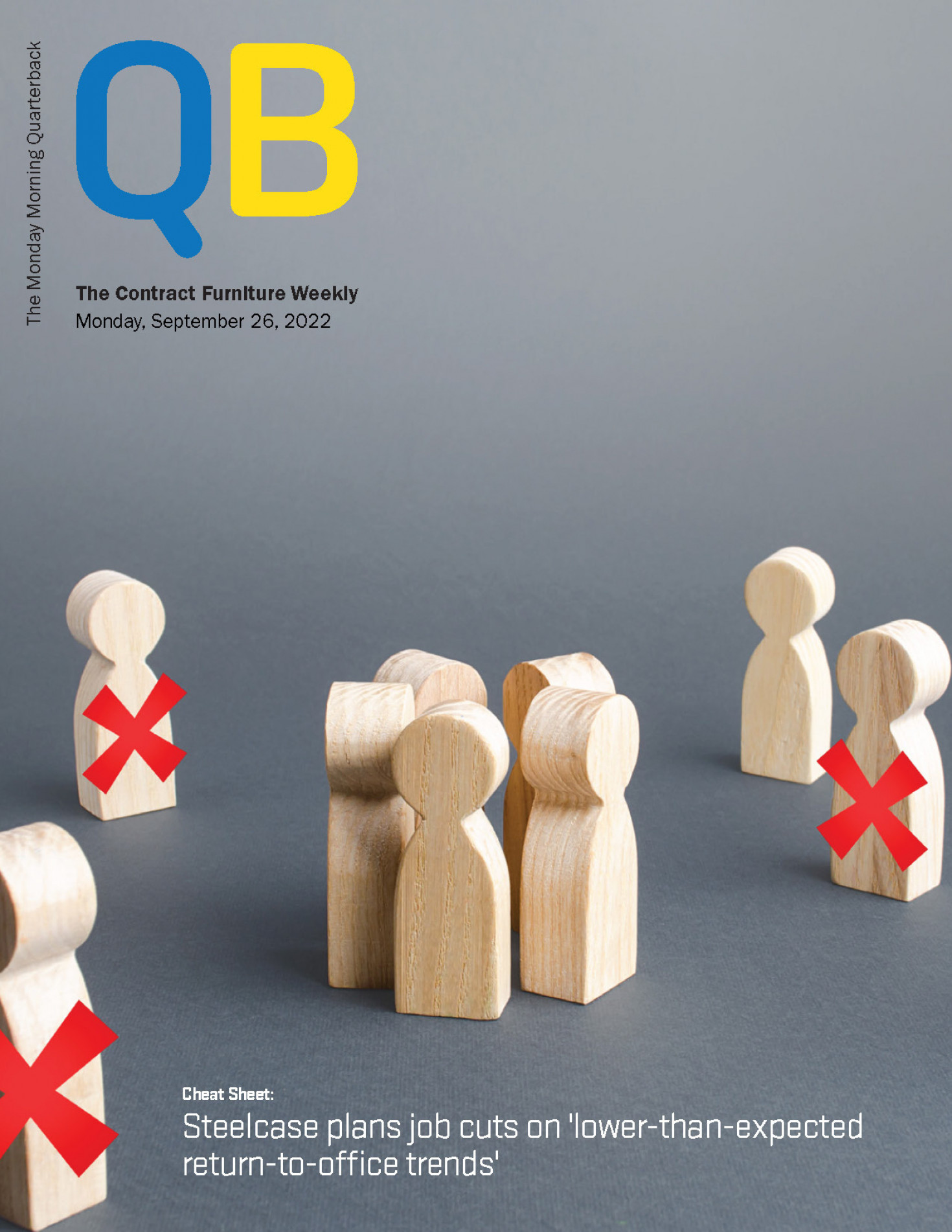
However, what spooked investors wasn't so much Steelcase's lackluster (and somewhat improved) results but the mention of 180 upcoming job cuts. Do growing companies cut employees? Not typically. But, as always with Steelcase, there is a confluence of influences conspiring against them.
Good news for Steelcase, bad news for buyers that are now paying more for their furniture. The company noted that inflation had put them into a $270 million hole after the past six quarters. But for the first time since fiscal 2021, their year-over-year pricing benefits (price increases) exceeded inflation this quarter. In fact, "we estimate that pricing benefits represented approximately 1/2 of the growth," noted the company on their earnings call. Jacking up prices = growth.
And if you look at where Steelcase is doing best, it isn't necessarily with desks and chairs. Smith System, a part of its education category, had the highest quarterly revenue in its history last quarter, growing by more than 50% over the prior year. And retail business revenue grew 17% versus the prior year. That retail business being still driven by WFH sales.
Overall, Steelcase is a mixed bag for investors as it hit its 52-week low last week. Wall Street doesn't like layoffs and pounded the shares. Further, lots of folks on Wall Street don't agree that the bulk of employees are coming back to the office, and those that do won't necessarily be there five days a week - resulting in lower demand for corporate furniture.
Finally, things may not be as dire as they appear - at least, we hope not. Steelcase dealers meeting recently in Grand Rapids conveyed a positive message as far as sales were concerned. Meanwhile, the company says bookings to fly to Grand Rapids (using their jet fleet) and view furniture are "sold out" through the end of the year. That would suggest that big customers are (still) working on future projects - a positive for everyone. Of course, these (kicking the tires) customers could be just a group of quiet quitters looking for a few days away from the workplace. MW
How the mighty have fallen. With a market cap of $826.5 million, Steelcase is now firmly in third place among publicly traded office furniture makers. MillerKnoll reigns supreme with a market cap of $1.503 billion. When they announce results this week, we'll get a better reading on their current health. Meanwhile, HNI's market cap is a pleasant $1.137 billion. Needless to say, all three traded at or near their 52-week lows last week. As far as CEO performance is concerned, Sara Armbruster has been CEO for about a year, and Steelcase shares are down 41.57% since she become number one. But, to be fair, Andi Owen, CEO at MillerKnoll has presided over a drop of 51.57% in share price over a similar period.
Bottom line: Shareholders of Steelcase care less about sales and profits than they do about the dividend. Many founding families live off of the dividend. Steelcase pays a dividend of $0.58 per share. Steelcase's annual dividend yield is 7.91%. Steelcase's dividend is higher than the US industry average of 5.17%, and it is higher than the US market average of 4.14%. Most worrisome is Steelcase's past year earnings per share was $0.13, and their annual dividend per share is $0.58. SCS's dividend payout ratio is 446.2%, which is not sustainable.

The jobs cuts will occur at corporate functions — human resources, operations, finance, information technology, facility management and other areas — and in the core Americas division.
A Steelcase spokesperson told MiBiz in an email that “these job reductions will impact our workforce in locations throughout North America, including Grand Rapids.”
Kastle’s 10-city average, based on a survey of entry card swipes, jumped to 47.5% in this week’s report from last week’s level of 43.4%, with all 10 markets posting solid gains—led by an 8.7% surge in New York City, which jumped to 46.6% from last week’s level of 38% in Kastle’s report.
Reimagining the office is critical to the future of the workplace, particularly as hybrid models take center stage.
Daan van Rossum is the CEO of FlexOS and Dreamplex, both of which help companies in South East Asia connect to, launch and manage hybrid workplaces. His aim is to provide workplace experience as a service, making the transition to a flexible environment more seamless and effective.
In discussion with Allwork.Space’s Future of Work Podcast, he breaks down why embracing hybrid work will be critical in employee retention and leads to a thriving company.


One-of-a-Kind Commercial Furniture and Architectural Casework Solutions
Colecraft Commercial Furnishings has been creating and building one-of-a-kind commercial furniture and architectural casework solutions at its manufacturing headquarters in Jamestown New York since 2003. In the furniture world, Colecraft might be considered a relatively new business yet, its boutique size and customized work stems from the long-standing Jamestown NY history and tradition of skilled furniture craftsmen.
Beyond the standard furniture and casework offered by most commercial furniture manufacturers, Colecraft develops initial design concepts and customizes each build to meet a client’s specific “Design intent” . Every piece of furniture, made by the artisans at Colecraft is customized in style, size, color, finish and technology integration.
Merging state-of-the-art design, engineering, and CNC technology with highly skilled artisans and traditional craftsmanship, the company has provided furniture for many of the nation’s leading businesses, institutions and universities. The companies tag line is “The Art of Detail” and the products delivered are masterpieces in terms of quality, form, function and “Detail”.
Product design focus is centered functionally on Reception and Executive Desks, Conference Room Furniture as well as Library, Courtroom and Institutional Furniture. Resimercial, Biophilic and Executive WFH designs are also part Colecraft’s design acumen. Colecraft’s market segments served includes business, education, healthcare , hospitality and luxury automotive showrooms.
As a manufacturer concerned about its environmental impact and stewardship, much of the raw material Colecraft uses consists of recycled or recovered content and more than 50 percent of the raw materials used is sourced within a 150-mile radius of the Jamestown NY factory.
Colecraft sells and distributes its furniture through A grade commercial contract dealer partners throughout the United States. For more information about Colecraft Commercial Furnishings, visit www.colecraftcf.com, email sales@colecraftcf.com or call (716) 488-2810 ext.1.
Those who are coming back into the workplace have expressed their desire to move away from the open office layout that took the real estate world by storm years ago.
Although this design waned in popularity even before the pandemic, the desire to stray away from these private-less spaces has grown.
Earlier this year, 59% of Americans with the ability to work remotely were doing so most or all of the time, up considerably from the 23% who did so before the pandemic, per data from Pew Research. And while some companies have embraced remote work, others are still trying to find ways to get employees back at their desks.
According to the analysis, flexible office users want to be in these spaces at least half of the work week, which is a 19% increase from the current rate, and decrease their remote working arrangements by the same amount.
This supports the notion that employees are ready to be back in an office setting, but still value having the flexibility to choose where and when they work.

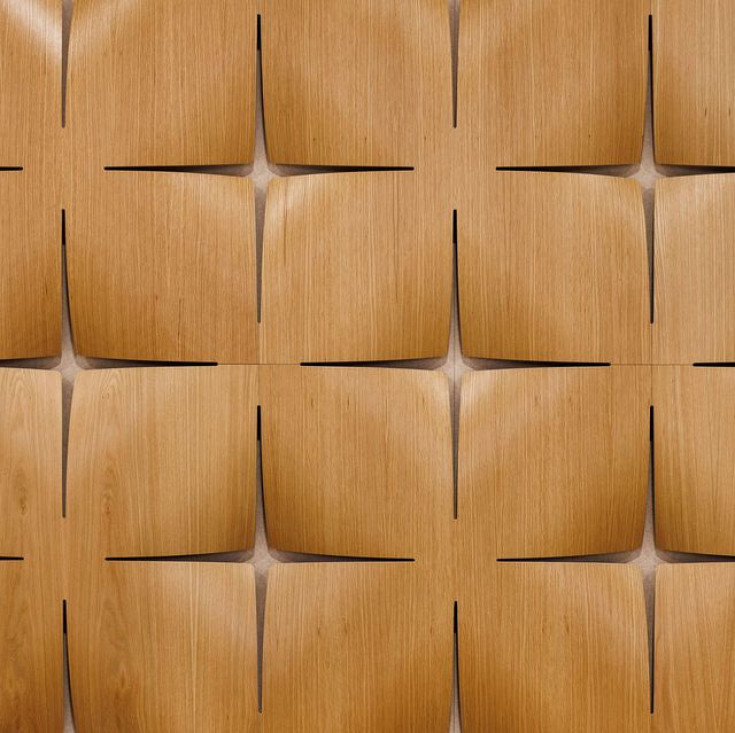
EcoSupply welcomes Tekstur panels to its expansive product portfolio. As a sustainable option to add a protective and decorative element to nearly any interior or exterior space, the panels are extremely resistant to fire (Class A), water, and impact damage. Antimicrobial and unsusceptible to staining, the panels are an excellent choice for commercial, hospitality, healthcare, and other high-traffic environments that are particularly conscious about cleanliness.To learn more about EcoSupply and the brand’s latest product offerings, visit ecosupplycenter.com.

QB Review of the Review: Again, not really a review per se. Just an observation from an industrial designer with exactly two comments from readers. Our own experience is that no industrial designer is satisfied with someone else's work. Ever.


Solomon Coyle, a provider of research services for the contract furniture industry, announced its partnership with ITR Economics, an unbiased economic research and consulting firm known for having a 94.7% forecasting accuracy rate.
Through this partnership, Solomon Coyle will be providing a subscription-based Market Index Report, to be delivered quarterly along with analysis provided by ITR economists.
“This new partnership leverages the respective strengths of both ITR and Solomon Coyle to create compelling value for both dealer-distributors and manufacturers,” states Paul Holland, managing principal of Solomon Coyle. “We will be able to leverage the strength of ITR’s highly respected economic forecasting while combining our own expertise in the contract furniture industry to provide more comprehensive, forward-looking and actionable data to strengthen the business planning efforts of a variety of decision makers across the industry.”
For more information, visit: www.solomoncoyle.com/market-index-report
On view at Ace Hotel New York from October 19th to 30th, The Be Original Americas: Originality Deconstructed exhibition celebrates creativity by pulling back the curtain on the “how” and “why” of some of the international design industry’s most iconic products, demystifying what goes into their conception. Commemorating Be Original Americas’ 10th anniversary, the showcase incorporates physical designs, disassembled elements, and raw materials by members Emeco, Flos, Louis Poulsen, and Suzanne Tick.