
Furniture Fiascos: The Absurd Realities of Office Life
Welcome back to another week in the wild and wonderful world of office furniture, where desks are scarce, chairs are scandalous, and a $10,000 bribe is apparently the going rate to get butts back in seats. Let’s break down the madness.
1. FEMA’s Return-to-Office Plan: Now Featuring Coin Tosses
The Federal Emergency Management Agency (FEMA) is embracing the future of workplace decision-making: flipping coins to determine who gets a desk. That’s right, in the great return-to-office scramble mandated by President Trump, FEMA has realized it doesn’t actually have enough workspaces for all of its employees. If you’re a full-time worker, senior, or just plain lucky, you might score a desk. Otherwise, you can enjoy an exciting day in an auditorium with no WiFi.
This might be the first time the phrase "disaster management" applies to FEMA itself.
2. The Case of the $11,327 Office Makeover (That Never Happened?)
Over in Ghana, Sammy Gyamfi, the acting Managing Director of the Precious Minerals Marketing Company (PMMC), is fighting allegations that he splurged nearly GHS174,000 ($11,327 US) on new office furniture and a fridge. Gyamfi insists not a single chair, desk, or even an A4 sheet has been changed since he arrived.
Moral of the story: Always take pictures of your office before moving in. You never know when you’ll be accused of an extravagant furniture shopping spree.
3. The SWAMP Act: Draining D.C. of Federal Agencies and Contracts
The Strategic Withdrawal of Agencies for Meaningful Placement Act, or SWAMP Act, is shaking up the federal workplace—and the contract furniture industry in Washington, D.C., is bracing for impact. The proposed legislation, championed by Rep. Ashley Hinson, seeks to relocate government agencies across the country, decentralizing federal operations.
While this might sound like a win for local economies in places like Iowa, it's a looming disaster for D.C. furniture dealers who have long relied on government contracts to outfit sprawling federal offices. With the General Services Administration reviewing its leasing strategy and billionaire Elon Musk leading the charge to slash government real estate, the demand for new office furniture in the nation's capital could plummet.
Meanwhile, the law would prohibit federal agencies from executing new leases or major renovations in D.C. and surrounding counties, further dampening business for contract dealers in the area. In other words, if you’re in the business of supplying chairs and workstations to federal agencies, it might be time to start courting clients in the Midwest.
4. Cameo’s Genius Plan: Pay People to Show Up
Cameo, the company that lets you pay celebrities (or, let’s be honest, anyone with a Wikipedia page) to send personalized videos, has discovered a new strategy to get people back to the office: offer them a $10,000 raise. And you know what? It’s working. Every single Chicago-area employee has agreed to the deal.
Of course, there’s a catch—those who refuse might need to find a new job. But hey, at least they’re getting free parking, gym memberships, and daily catered lunches. Meanwhile, over at FEMA, they’re wondering if Cameo will start offering personalized pep talks for federal employees stuck in an internet-free auditorium.
5. The UK Government’s Million-Pound Furniture Shopping Spree
Over in the UK, the Conservative government has been criticized for spending over £1.6 million on office furniture while the country deals with economic struggles. The Department for Work and Pensions led the charge, filling their offices with shiny new desks and chairs while citizens grappled with soaring costs of living.
Nothing quite says “fiscal responsibility” like splurging on ergonomic chairs while public sector workers fight for better pay. But hey, at least they didn’t leave it to a coin toss.
Final Thoughts
This week has been a masterclass in office furniture absurdity. We’ve got government agencies sending employees on scavenger hunts for desks, CEOs bribing workers to return, and political scandals over whether a refrigerator really exists. If there’s one lesson here, it’s this: office furniture is never just furniture—it’s politics, power, and occasionally, a game of heads or tails.
See you next week, assuming you can find a desk to sit at.

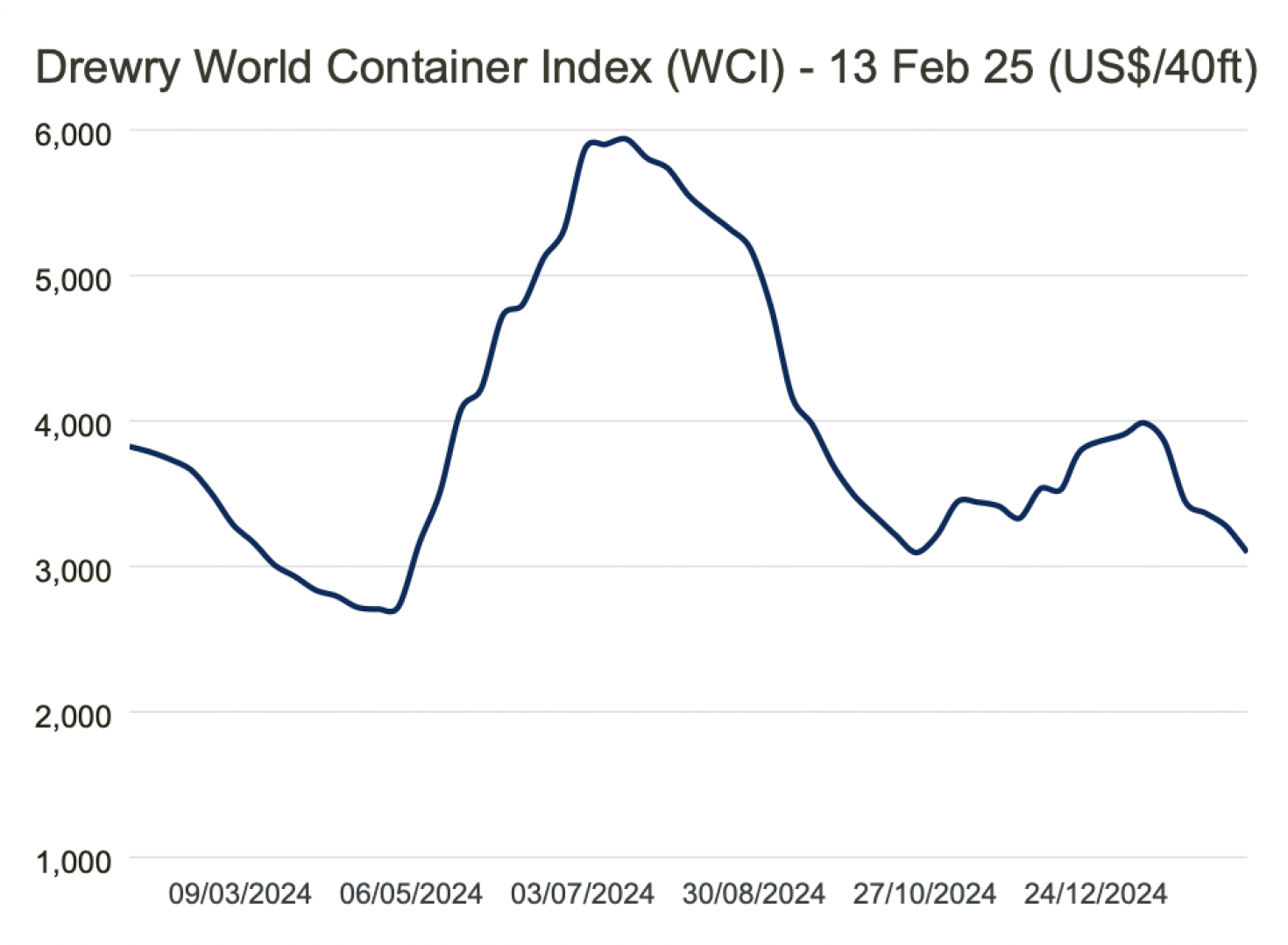
In January, construction material costs experienced their fastest monthly increase in two years as contractors rushed to purchase supplies ahead of impending tariffs imposed by President Trump on imports from Canada, Mexico, and China. Overall construction input prices rose by 1.4% compared to December, marking a significant increase since February 2020. Key factors behind this price surge included a rise in energy costs, particularly crude petroleum and natural gas, as well as a spike in prices for hot-rolled steel. Many contractors anticipated further price hikes due to a backlog of projects and ongoing tariff pressures. Trump's tariffs on steel and aluminum, scheduled to begin in March, are expected to contribute to rising input costs, raising concerns about potential inflation in the economy.


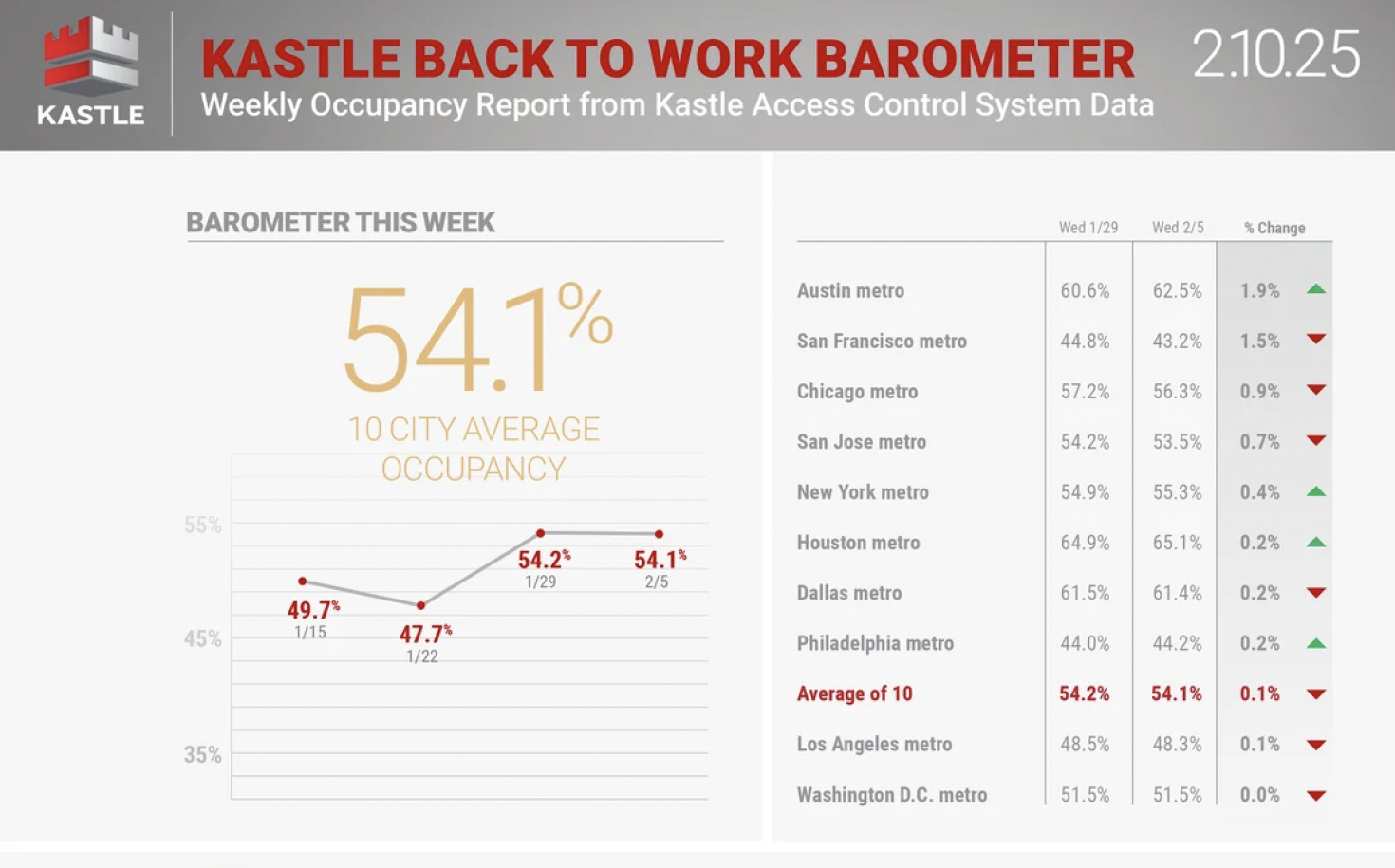
Peak day office occupancy was 63.3% on Tuesday last week, down one tenth of a point from the previous week. Austin saw a 2.7-point increase in Tuesday occupancy, up to 71%, and a 7.5-point increase in Wednesday occupancy, up to 71.9%. The average low was on Friday at 35.8%, down nearly a full point from last week.
The weekly average occupancy dipped one tenth of a point to 54.1% last week, according to the 10-city Back to Work Barometer. Only Austin and San Francisco experienced changes of more than one full point. Austin increased 1.9 points to 62.5% and Houston dropped 1.5 points to 43.2%. Houston and Philadelphia hit new record highs for the second straight week, rising two tenths of a point to 65.1% and 44.2%, respectively. And Washington, D.C. held steady at its record high of 51.5%.

Haworth’s $1 Billion Bid for Flos B&B Italia Rejected—Who Can Afford the Price?
The Flos B&B Italia Group is evaluating informal offers for its furniture division following the unexpected departure of its chief executive officer, Daniel Lalonde. Among the interested parties is Michigan-based Haworth Group, which reportedly made an offer valued between 800 million and 1 billion euros—an offer that was ultimately rejected for being too low.
Haworth’s interest comes as little surprise given its aggressive expansion into the high-end Italian furniture market over the past decade. With previous acquisitions of luxury brands such as Poltrona Frau, Cassina, and Cappellini, Haworth has positioned itself as a dominant player in the contract and high-end residential sectors. Acquiring Flos B&B Italia would further solidify its standing in the premium design space, particularly in the North American and European markets.
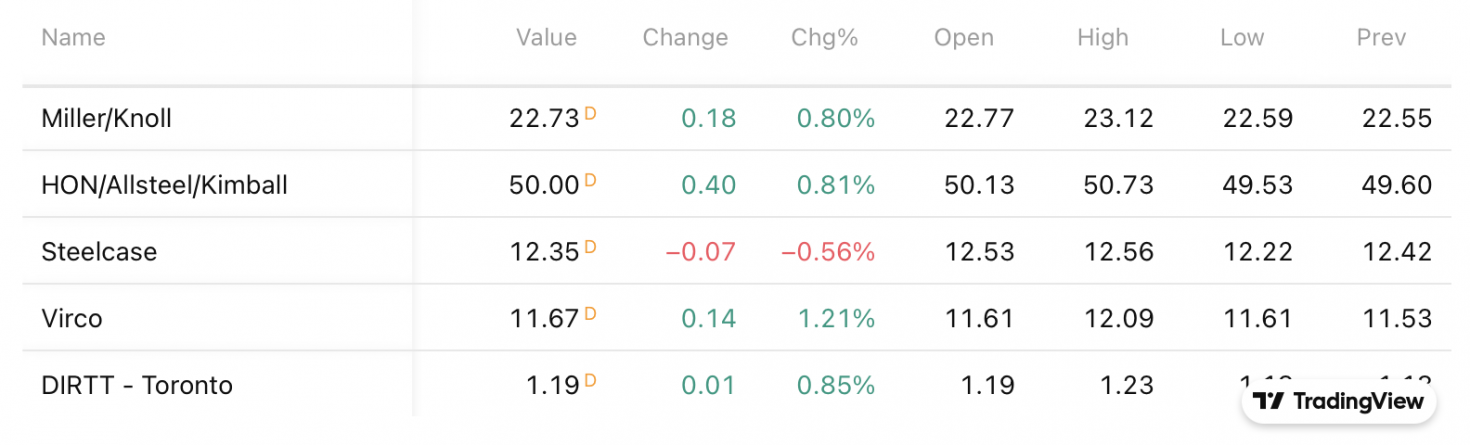
While Haworth seems like a natural fit, speculation lingers over what other firms could potentially make a play for the company. MillerKnoll, another major American contract furniture manufacturer, would have been a logical contender, but given its ongoing integration challenges following the Knoll merger, as well as financial constraints, it may struggle to secure the necessary capital. Steelcase, on the other hand, has historically focused on its core contract furniture business, and its management structure is not particularly suited to a major move into high-end residential—a sector where B&B Italia thrives.
This raises a larger question: Which contract furniture manufacturer could realistically afford the price tag of more than $1 billion? The luxury furniture market is capital-intensive, and with macroeconomic uncertainties, even well-capitalized firms might hesitate to make such a bold move. That leaves private equity as the most likely route, though it remains to be seen whether a deal can be structured that satisfies both the sellers and prospective investors.
Lalonde’s departure in January followed internal disagreements over restructuring plans. His tenure was marked by efforts to consolidate the company’s luxury brands—including B&B Italia, Maxalto, Arclinea, Flos, and Louis Poulsen—into a unified retail concept, which culminated in the launch of a flagship store on Madison Avenue in New York. In the wake of his resignation, former Flos CEO Piero Gandini has stepped in as executive chairman, a move that has fueled speculation about whether the company will sell its furniture and lighting divisions separately.
The Flos B&B Italia Group, previously known as Design Holding, was formed in 2018 through a partnership between Investindustrial and the Carlyle Group. In 2021, it entered into a joint venture with Fendi to develop the Fendi Casa line. With a changing leadership landscape and ongoing restructuring, the group’s future strategy remains uncertain. However, one thing is clear: the luxury furniture and lighting sectors are ripe for consolidation, and this latest development could set the stage for more high-profile mergers and acquisitions in the near future.


DIRTT’s Legal Efforts Against Falkbuilt Falter in U.S., Case Now Restricted to Canada
DIRTT Environmental Solutions Ltd., a company specializing in industrialized construction, has provided an update on its ongoing litigation against Falkbuilt, Smed, and Loberg.
Notably, DIRTT has now lost all legal actions against Falkbuilt in the United States. On February 5, 2025, the U.S. District Court for the Northern District of Utah granted Falkbuilt’s motion to dismiss DIRTT’s claims on the grounds of forum non conveniens. The court ruled that Canada is the appropriate jurisdiction for any disputes, as Canadian law applies to most of DIRTT’s claims, and DIRTT Environmental Solutions Ltd. (the Canadian entity) owns the trade secrets in question. The court’s decision effectively ends DIRTT’s pursuit of this litigation in the U.S., forcing the company to focus exclusively on its case in Canada.
Meanwhile, in November 2024, the Court of King’s Bench of Alberta scheduled an 8-week trial to begin on February 2, 2026, running until March 27, 2026. With no legal recourse remaining in the U.S., DIRTT is now attempting to seek damages in Canada, claiming over $50 million in losses allegedly caused by Falkbuilt, Mogens Smed, Barrie Loberg, and others. DIRTT maintains confidence in its case, despite its failure to pursue legal action successfully in the United States.
This latest development underscores the setbacks DIRTT has faced in its legal battle, leaving Canada as its last remaining avenue to litigate its claims.




Herman Miller Discovers Desks—Stop the Presses!
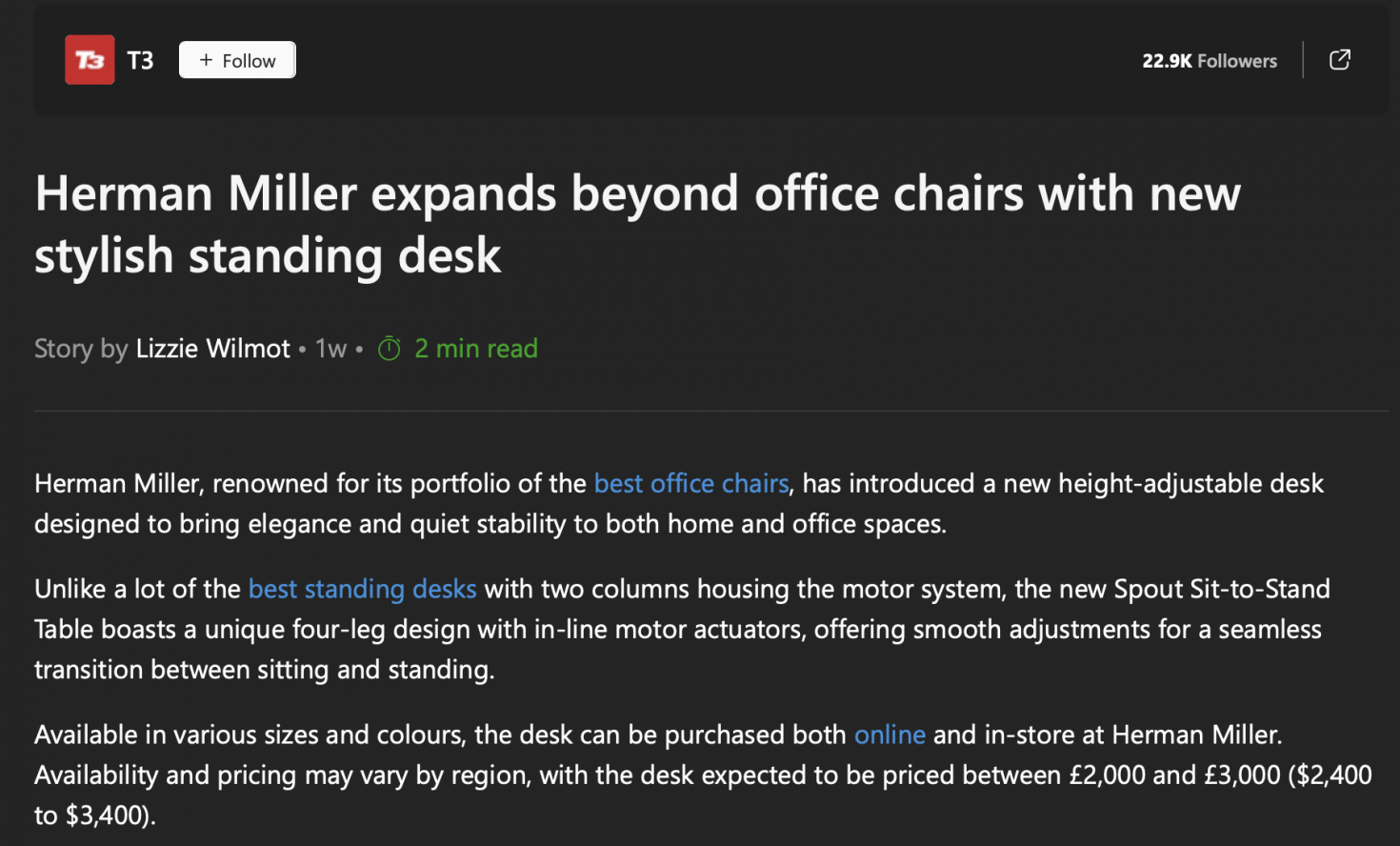
In breaking news from the cutting edge of journalism, T3 Magazine has just unveiled a shocking revelation: Herman Miller expands beyond office chairs with new stylish standing desk. Yes, you read that right. The 100-year-old company that has been designing desks, workstations, and entire office ecosystems for decades has apparently just decided to diversify beyond chairs. Who knew?
One can only imagine the scene at Herman Miller headquarters: a team of designers huddled together, gazing at a chair and thinking, But what if… people needed a surface to put things on? A eureka moment for the ages.
Of course, anyone with even a passing familiarity with contract furniture knows that Herman Miller has been producing desks since at least the mid-20th century, from the Action Office systems of the 1960s to today’s height-adjustable workstations. But why let history get in the way of a dramatic headline?
T3’s take raises an interesting question: if Herman Miller “expands beyond chairs” by releasing a standing desk, should we brace for future bombshells? Perhaps, “Apple expands beyond iPhones with new laptop” or “Ford ventures beyond cars with latest SUV”?
In fairness, the desk in question—reportedly part of the Spout Sit-toStand Table Collection—looks sleek, modern, and undoubtedly well-engineered. But the real story here isn’t that Herman Miller is making a standing desk—it’s that publications like T3 continue to frame established facts as breaking news.
Stay tuned for their next exposé: “Steelcase shockingly found to produce more than just file cabinets!”

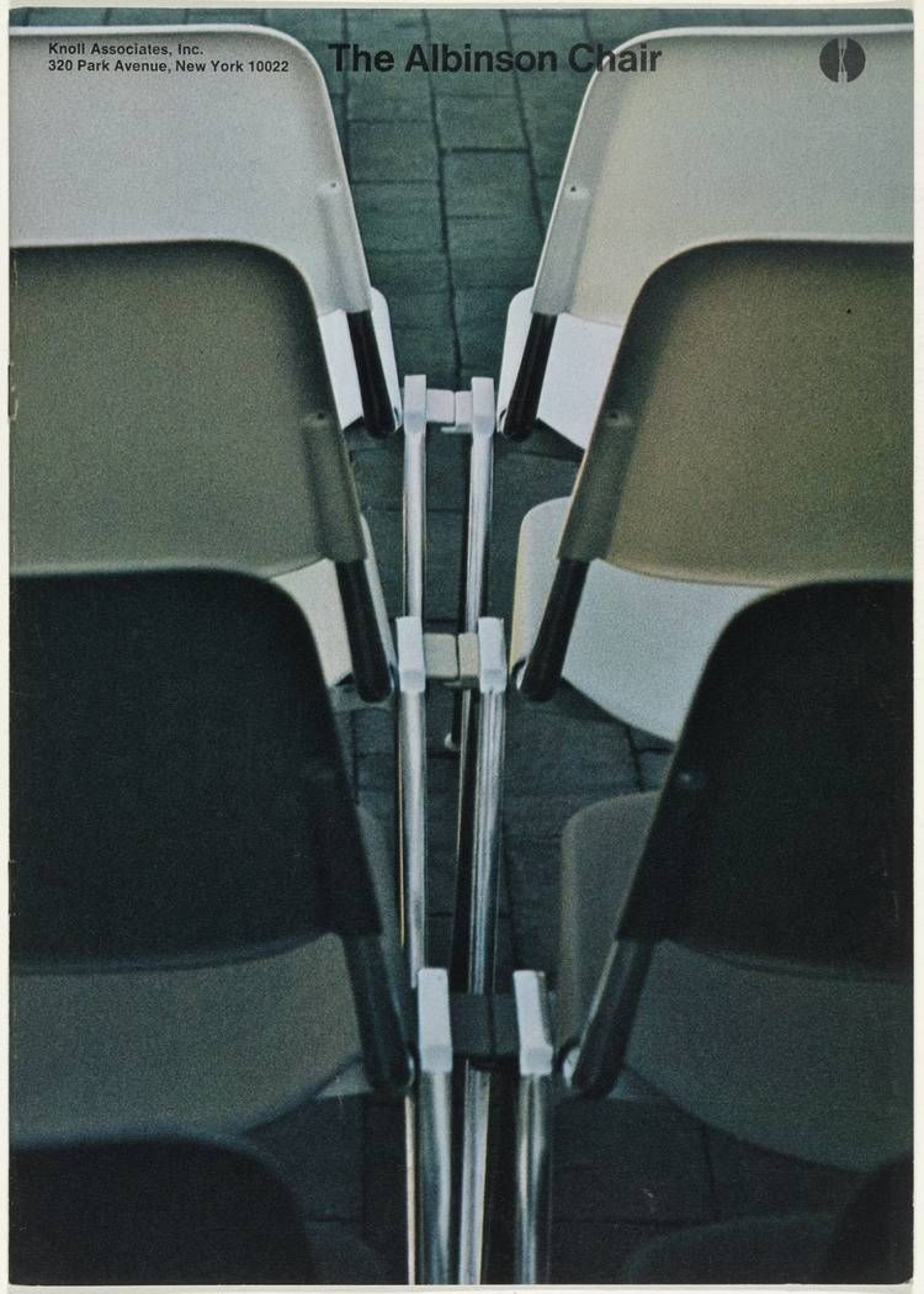
Knoll Albinson Chair brochure
The Albinson Chair
Knoll Associates, Inc. 320 Park Avenue, New York 10022


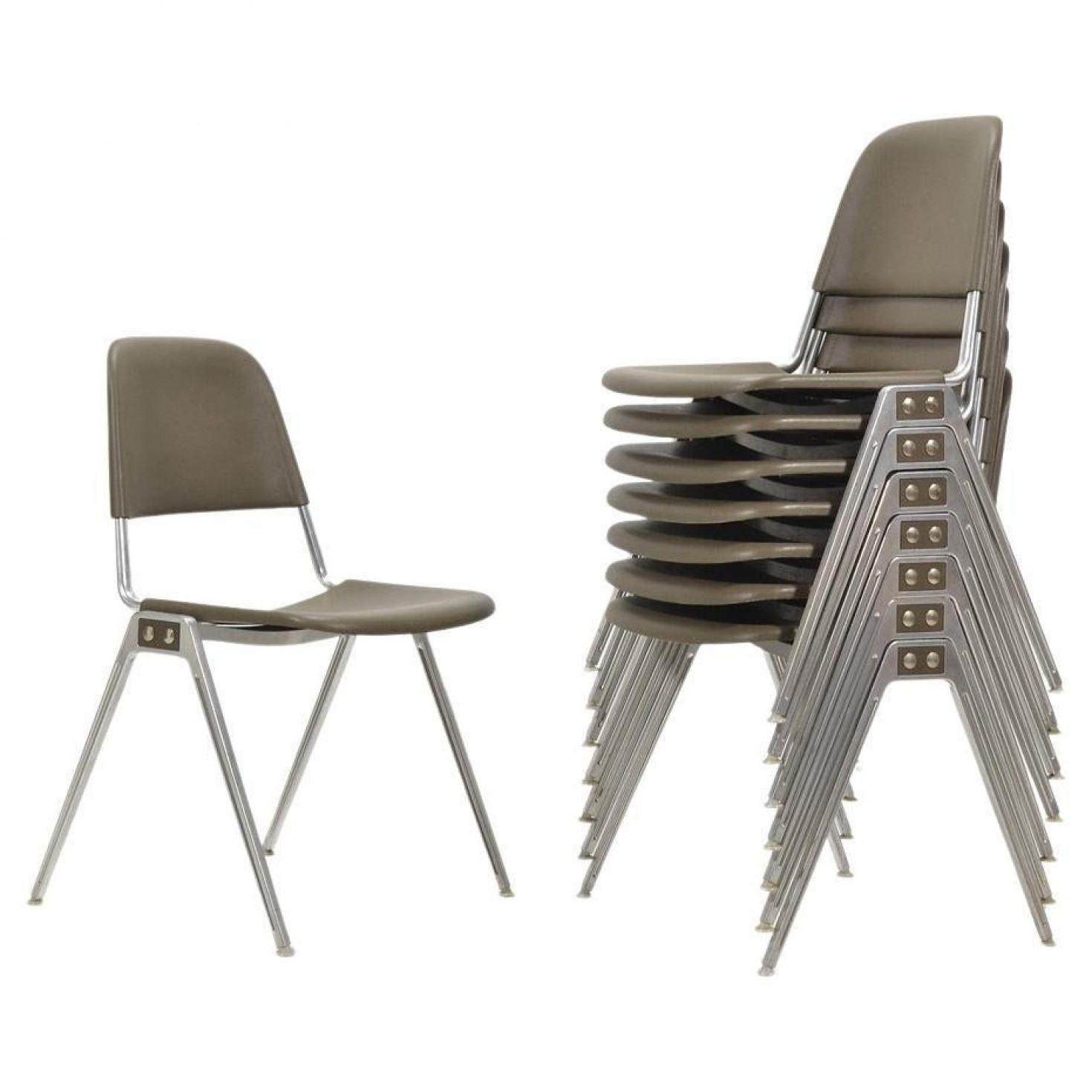
Don Albinson designed a set of 14 stacking side chairs for Knoll, known for their use of die-cast aluminum and molded plastic. The chairs, which can stack up to 20 high and feature nylon swivel floor glides, are priced at $400 each, with the option to purchase individually or as a complete set. The design reflects an industrial aesthetic reminiscent of notable designers like Jean Prouvé. The condition of the chairs is described as good, showing typical signs of age and use.
Seller Location: Highland, IN
$400 each or $5,600 for all 14 + shipping
MMQB Expert Advice: Pass.
The Don Albinson Model 1601 stacking side chair is a classic example of mid-century modern design—and of a price tag that might make you reconsider your furniture choices. Designed in 1965 during Albinson’s tenure at Knoll, this chair embodies the industrial aesthetic of its era, drawing comparisons to the work of Jean Prouvé and Friso Kramer. Albinson, a Cranbrook peer of Charles and Ray Eames, Ralph Rapson, Harry Bertoia, and Eero Saarinen, spent 13 years as head designer at the Eames Office before joining Knoll in 1964. His Model 1601 chair, which won the AID Award in 1967, showcases his exploration of die-cast aluminum components combined with molded plastic seats and backs. The result is a sleek, functional chair that can be stacked up to 20 high and includes nylon swivel floor glides for practicality.
Despite its design pedigree, the price of this chair in today’s vintage market raises some eyebrows. While it is undoubtedly a well-designed and historically significant piece, the $400 per chair asking price seems ambitious, considering comparable listings. On Etsy, similar chairs have been found for around $164 each, while a set of 18 on 1stDibs breaks down to approximately $265 per chair. Even eBay, not exactly a haven for budget furniture, has individual chairs listed at $325. Given these numbers, it’s difficult to justify the premium, especially when the condition is described as “good original vintage condition with typical signs of age and use”—a polite way of saying they’ve been around the block.
There’s no denying the appeal of the Don Albinson Model 1601. It’s a beautifully designed chair with a rich history, perfect for those who want to own a piece of mid-century modern heritage. But unless you’re a collector with deep pockets or someone who enjoys overpaying for nostalgia, it might be wise to shop around. For $400, you could likely find something equally stylish, just as comfortable, and in better shape—without the need to rationalize the cost as an “investment in design history.”


A family-owned company that has developed into a market-leading manufacturer of high-quality components for the office chair, lounge furniture and automotive industry since 1969. Bock supports their customers as a holistic specialist partner and manufacture both standardized and individual solutions made of polyurethane, various plastics and aluminum according to your requirements.