Master's Degree of the Sacred Arts 

APPLICATION PROCEDURE


HUMANITIES
Course Descriptions

The Humanities include studies across various disciplines: visual arts, languages, music, literature, philosophy, and history. The value of the humanities is that they prepare you to think logically, creatively, and critically about our world and the world around us.

In studying historical and present-day issues, scholars can build robust skills that can be applied to ministry careers that require clear communication, understanding of human behavior, teamwork, planning, and problem-solving. 

Languages

HumBH. 330: 3 cr.
Biblical Hebrew I

The Bible, translated in English or in any other language, is a reflection of the translator’s interpretation of the text, according to his beliefs and doctrines. In our search for the original meaning of the biblical text we must read it in its original language, which is Hebrew
The many differences between Hebrew and English present challenges to those who tries to get to this original meaning, so this course is the first step of removing the "layers" off the text.

HumBH. 332: 3 cr.
Biblical Hebrew  II

The first part of the course, Biblical Hebrew 230, was dedicated to getting to know the fundamentals of the Hebrew language, as it is reflected in The Bible.
In this course, Biblical Hebrew 232,  the students will continue to deepen their knowledge of those fundamentals, as they are reflected in other parts of the sentence, all under the scope of understanding the original meaning of the biblical words.The first part of the course, Biblical Hebrew 230 was dedicated to getting to know the fundamentals of the Hebrew language, as it is reflected in The Bible.
In this course, the students will continue to deepen their knowledge of those fundamentals, as they are reflected in other parts of the sentence, all under the scope of understanding the original meaning of the biblical words. At the end of this course the students will be able to read more fluently, analyze verbs and find connections between the parts of the sentence.

HumBH. 333:  3 cr.
Biblical Hebrew III

After studying the fundamentals of the Hebrew language in the Bible, in this course we will focus on understanding biblical poetry, focusing on its unique characteristics, themes, structures, and the cultural and historical contexts in which it was written. Through close analysis of selected passages, students will gain insight into the literary techniques employed by biblical writers/poets and the spiritual messages conveyed through their works.

HumSp. 230: 3 cr.
Spanish for Ministry I

This course will teach Spanish grammar and conversation with applications to Christian ministry. There will be practical thematic vocabulary lessons and assessments. which will include religious words and phrases, mission vocabulary, cultural insights, and key Bible verses necessary for Christian outreach and leading a seeker to Christ.

HumSp. 232: 3 cr.
Spanish for Ministry II

This course is a continuation of SFM I, and will continue to teach Spanish grammar and conversation with applications to Christian ministry. There will be practical thematic vocabulary lessons and assessments. which will include religious words and phrases, mission vocabulary, cultural insights, and key Bible verses necessary for Christian outreach and leading a seeker to Christ.

HumSp. 233: 3 cr.
Spanish for Ministry III

This course is a continuation of SFM II, and will continue to teach Spanish grammar and conversation with applications to Christian ministry. There will be practical thematic vocabulary lessons and assessments. which will include religious words and phrases, mission vocabulary, cultural insights, and key Bible verses necessary for Christian outreach and leading a seeker to Christ.

HumSp. 340 & 342 & 343 -12 cr. 
Spanish for Clergy 
36 weeks total
[Three terms]

The course is directed to enhance Spanish spoken language with emphasis in Biblical and Theological vocabulary and worship methodology.
Prerequisite:  .Spanish Level 233 or admission by the professor.
This Course requires a minimum of 10 hourly week of lectures and coursework.
The Spanish for Clergy Course - Level 3 requires social vocabulary and knowledge of the following tenses and modes in Spanish:
Present Simple,
Present Progressive,
Imperfect
Past Simple
Reflexive and Reciprocal verbs
Commands

Writing

HumWr. 130, 132, 133: 9 cr.
Academic Writing I, II, III
[Three terms]

The goal of Academic Writing  is to familiarize scholars with the kind of writing they will have to do in college, broadly referred to as academic writing. In this three-term course, we will study and practice, Narrative, Explanatory, Argumentative, and Research writing. 
 
By the end of this course the scholar will be able to:
  • Write arguments to support claims in an analysis of substantive topics or texts, using valid reasoning and relevant and sufficient evidence.
  • Write informative/explanatory texts to examine and convey complex ideas and information clearly and accurately through the effective selection, organization, and analysis of content.
  • Write narratives to develop real or imagined experiences or events using effective technique, well-chosen details, and well-structured event sequences.
  • Produce clear and coherent writing in which the development, organization, and style are appropriate to task, purpose, and audience.
  • Develop and strengthen writing as needed by planning, revising, editing, rewriting, or trying a new approach.
  • Use technology, including the Internet, to produce and publish writing and to interact and collaborate with others.
  • Conduct short as well as more sustained research projects based on focused questions, demonstrating understanding of the subject under investigation.
  • Gather relevant information from multiple print and digital sources, assess the credibility and accuracy of each source, and integrate the information while avoiding plagiarism.
  • Draw evidence from literary or informational texts to support analysis, reflection, and research.
  • Write routinely over extended time frames (time for research, reflection, and revision) and shorter time frames (a single sitting or a day or two) for a range of tasks, purposes, and audiences.


HumWrx. 134: 3 cr.
Academic Literacy  

The course will teach you to: improve your time management and organisational skills;think critically about following instructions and assignment criteria;identify and evaluate reliable sources;use different reading techniques appropriately;make notes effectively;present a logical argument in an academic essay, taking account of your reader(s) and purpose(s);plan and produce accurately referenced assignments.


HumWr. 230: 3 cr.
Argumentative Essay Writing
This course may be employed as a pre-requisite to Intro. to Homiletics

By the conclusion of this course the scholar will be able to:
  • Write arguments to support claims in an analysis of substantive topics or texts, using valid reasoning and relevant and sufficient evidence.
  • Produce clear and coherent writing in which the development, organization, and style are appropriate to task, purpose, and audience.
  • Draw evidence from literary or informational texts to support analysis, reflection, and research.
  • Develop and strengthen writing as needed by planning, revising, editing, rewriting, or trying a new approach.
  • Write routinely over extended time frames (time for research, reflection, and revision) and shorter time frames (a single sitting or a day or two) for a range of tasks, purposes, and audiences.


HumWr. 332: 3 cr.
Theological Writing
This course may be employed as  pre-requisite to the Capstone-Thesis

The course provides step-by-step practical and conceptual methods for effective writing in a theological context. Furthermore, it guides the scholars about how to write theology through an ongoing process of inquiry, reflection, and practice embracing the development of one's own theology by reading other theologians’ writings.

HumWrx. 430: 3 cr.
Creative Writing 

Beginning with an introduction to writing fiction, this course leads students step-by-step through the essentials of the craft – including characterization, plotting, description, dialogue and editing – towards an enhanced understanding of how novels and stories are written. There are also individual sessions on special topics – such as constructing an effective opening sequence, using imagery creatively, and working with experimental or other distinctive genres – and the emphasis throughout is upon developing an individual voice and a confident style while working in a wholly supportive environment.

Rhetoric

HumCom. 230: 3 cr.
Intro. to Rhetorical Analysis
This course has a Praxis component.
This course may be employed as a pre-requisite to Intro. to Homiletics.

This course will introduce and reinforce major rhetorical analysis concepts such as the rhetorical situation, rhetorical choices, annotation, line of reasoning, embedding evidence, writing commentary, and more. Scholars will participate in a variety of analysis activities: from analyzing historical speeches and viewing modern advertisements to watching and analyzing movie speeches aimed to motivate and inspire audiences around the globe.Passages of famous speeches from FDR, George W. Bush, Florence Kelley, Barack Obama, Madeleine Albright, and a letter from Queen Lili'uokalani will be studied. When scholars have mastered how to evaluate rhetorical strategies - including rhetorical devices and appeals - within smaller texts, they will delve into Elie Wiesel's masterfully crafted "Hope, Despair, and Memory" Nobel Prize speech, all while they annotate and rhetorically analyze the strategies Wiesel uses to impact his audience.  During the final weeks, the scholars will create and present a Persuasive Advertisement Project, that allows them to creatively show their mastery of rhetoric at the end of the unit.

HumCom. 232: 3 cr. 
Rhetoric - Ethos, Pathos, Logos
This course is may be employed as a pre-requisite for Intro. to Homiletics.

This course focuses on the art of persuasion which is an important component of communication in ministry.
By the completion of this course the scholar will be able to:
  • Initiate and participate effectively in a range of collaborative discussions (one-on-one, in groups, and professor-led) with diverse partners on topics, texts, and issues, building on others’ ideas and expressing their own clearly and persuasively.
  • Evaluate a speaker’s point of view, reasoning, and use of evidence and rhetoric, identifying any fallacious reasoning or exaggerated or distorted evidence.
  • Initiate and participate effectively in a range of collaborative discussions (one-on-one, in groups, and professor-led) with diverse partners on topics, texts, and issues, building on others’ ideas and expressing their own clearly and persuasively.
  • Evaluate a speaker’s point of view, reasoning, and use of evidence and rhetoric, assessing the stance, premises, links among ideas, word choice, points of emphasis, and tone used.


Art History

HumAH. 130:  3 cr.
Art History-Art Through the Ages  
 

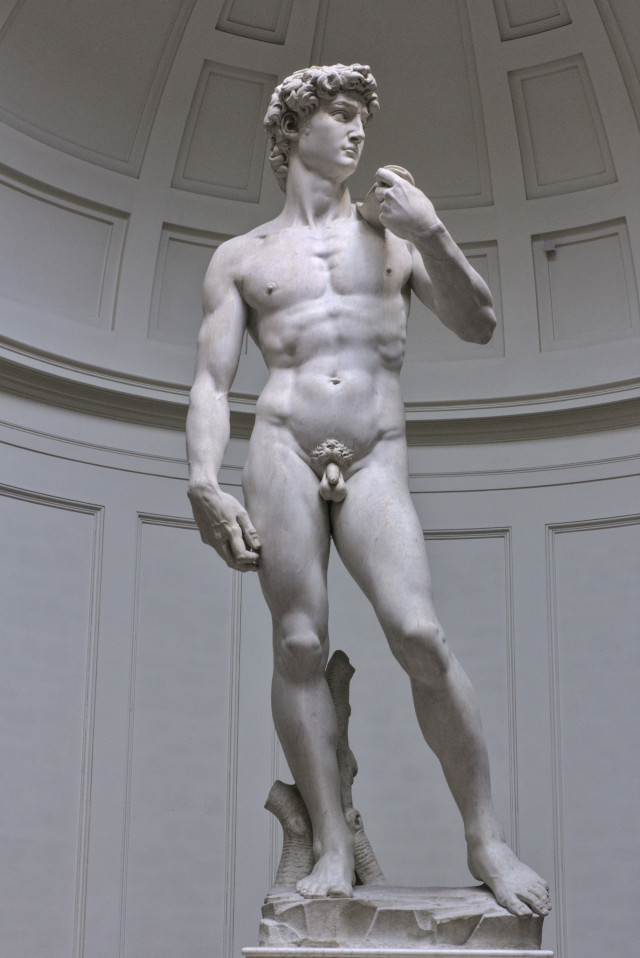
“Art through the Ages” is a twelve week course, with each session serving as a collection of significant artists, paintings, designers, historical figures, and furnishings from antiquity to present day; the major art movements, and their cultural, emotional, political and social impact.

HumAH. 132: 3 cr.
African American Art History Survey

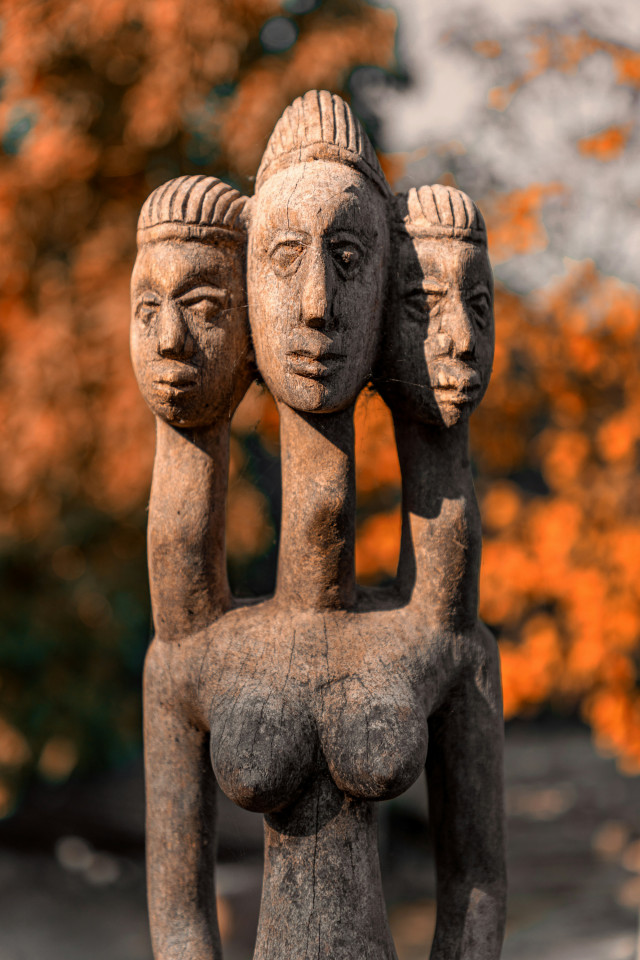
African American Art History Survey looks to the past starting with the Atlantic Triangle Trade. We address the physical and emotional scars that enslaved people suffered, with their lingering impact some 300-plus years later. Today we see hope and change, as witnessed by the great successes of its people especially in the arts. Their achievements have earned them distinguished accolades and a legendary place in history. They are a source of inspiration, pride, and great leadership for those who walk in their footsteps. This course examines the paths of those artists from all genres that brought us to this glorious pinnacle, both posthumous and living.

HumAH.123: 2 cr.
A Prominent African-American Art Survey: Comprehensive Museum Excursions

This is a praxis course that includes touring museums, galleries, and art houses.  It is designed to bring a greater comprehension and appreciation of the rich and diverse history and legacy of the African-American Diaspora to the present day.
We will be exposed to thought-provoking discoveries and interpretations of the arts. Including precious jewelry, photographs, films, quilts, sculptures, literature, paintings, and more! Treasures that have been nurtured and curated in private collections. Institutions, colleges, and museums have waiting to share these compelling stories, heard and experienced by you. We will visit many other celebrated museums and art galleries. We’ll journal and record all in our creative portfolios which will be reflective your subject matters interests and creative gifts.

HumAH. 230:  3 cr.
Art History- A Survey of World Architecture

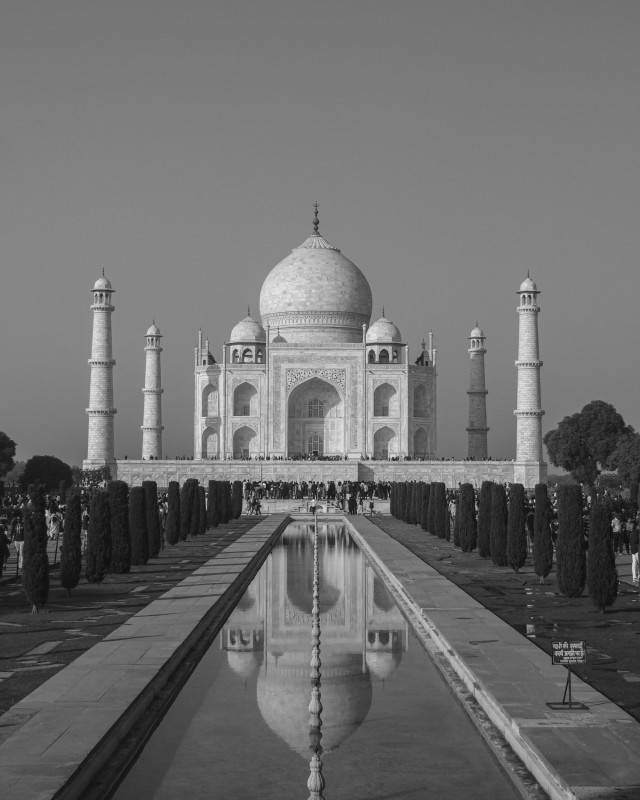
Drawing from a variety of texts and examples that emphasize the diversity and complexity of architectonic traditions around the world, this course will analyze how individuals have employed architectural strategies to solve the problems of living within diverse contexts and how such spaces not only provide meaning in everyday life but also actively and dynamically order the world as space, object, environment, text, process, and symbol.

HumAH. 232: 3 cr.
Art History-Christian Art and Architecture: Early Christian and Byzantine Art

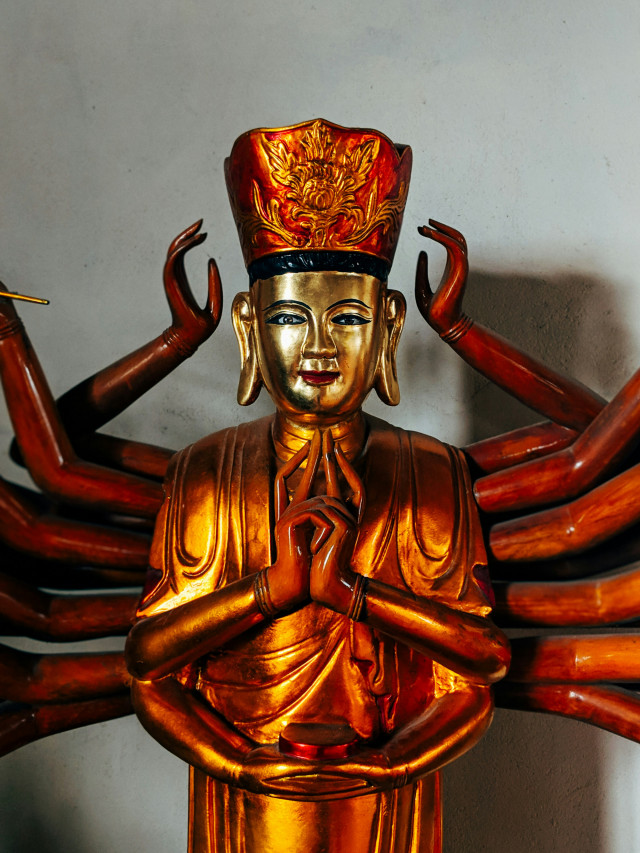
This course critically reviews early Christian and Byzantine art from the 2nd to 6th Century. Its fundamental idea is that early Christian art emerged and evolved as manifestations of the faith’s conversation with its changing cultural contexts. Students will learn to critically engage the role theology, ecclesiology, socio-economics, and politics have in Christian art, with a special emphasis on church/worship architecture as innovative art. The course will use a multi-media format including lectures, readings, seminar presentations and discussions, and site visits.

HumAH. 233: 3 cr.
Art History-Christian Art and Architecture: The Middle Ages through the Late Gothic Period

This course will survey highlights of the painting, sculpture, architecture, mosaics, tapestries, metalwork, ivories, and stained-glass windows of the Middle Ages in Europe and the Mediterranean. We will proceed in a chronological framework, starting with the 6th century Christia art, and ending in the late Gothic period. Works of art will be studied in their historical, social, cultural, and religious contexts. Thematically, we will examine continuities and breaks with the classical tradition; the recurring issue of iconoclasm; the rich diversity of materials; the fruitful effects of cross-cultural and interfaith exchanges; and the global context and long afterlife of medieval art.

HumAH. 330:  3 cr.
Art History- Architecture:
Majestic Residences and the Artists that Created Them

This course visits some of the most magnificent residences still in existence today. A selection from six in the UK and four in the US. We will discuss the Owners of these properties and the Artists that designed and created them. Many of these houses are on the National Register and can be visited today.

The Visual Arts

HumVA. 240: 4 cr.
Photography (Praxis)
Digital Photography

Digital photography draws on cutting-edge technology to tell visual stories and is a vibrant modern artform. This course teaches you how to command your camera’s ‘mode’ dial and use its shutter speed, aperture and ‘sensitivity to light’ setting (ISO) to get the perfect shot. You will examine the most important types of light and white balance (WB) and discuss lens structure, prime lenses and how to properly clean them.

The course uses demonstrations and visual aids to explain advanced concepts like bracketing, flash photography, hyperfocal distance and focal length. You delve into perspective and lay out the key features of ‘matrix’, ‘center-weighted’ and ‘spot’ metering. You then break down the process of resolving distractions or blemishes with Adobe Photoshop and learn how ‘bracketing’ can improve the photograph’s overall exposure.
This course may represent a stepping stone to a creative career in ministry 

HumVA. 242: 4 cr.
Photography  (Praxis)
The Art of Visual Storytelling

At the completion of this course, you will understand the photographer's production workflow, how to structure and write visual stories, the kinds of technology you can use to enhance your story, how to choose the best shots for the edit, the fundamentals of editing, and how to produce a visual story that meets professional standards. 

Liturgical Music

HumLM. 140: 4 cr.
Liturgical Music (Praxis) 
Vocalization I

1.SINGING IS A PSYCHOMOTOR PROCESS: Let us first establish here that 85% of your singing is mental (Psycho) and the remaining 15% is physical (Motor).As you strive to control your thoughts and muscles in your quest to sing, remember that they are your thoughts and muscles. You are the only one that can coordinate them and make your voice function as you want it to. The teacher can show you the way, but you've got to dedicate yourself to persistent, hard and concentrated work.

2. YOUR SINGING MUST BE A PRIORITY: How strong your desire is to be a great singer is fundamental to your development. This is one area that no one can do for you. Not the teacher, not your friends, only you. Don't Let flattery or applause from others be the measure of your vocal development. You must stay focused if you are to overcome your vocal challenges. Don't be discouraged. Be motivated by the assured realization of what changes can happen in your voice if you stay focused.

3. A GOOD TEACHER IS A MUST: Although singing is established here as a psychomotor (mind/muscle) process and a do it yourself activity, having good instruction is essential. Since most people don't hear themselves as others do, it is important that you acquire a good professional teacher. The teacher can give you the necessary guidance that is paramount to the solutions of specific vocal problems.

4. DO NOT BE IMPATIENT: Replacing a life time of singing habits with new singing techniques does not come quickly, or easily. The way that you sing is a result of personality and your concept of singing. It took years to make you what you are, so don't expect change to come in days, weeks or months. Be patient and be persistent in applying the principles and techniques in my book. In doing so your progress with be gradual and steady.

HumLM. 142. 4 cr.
Liturgical Music (Praxis) Vocalization  II
Pre-requisite Vocalization I

The Leaning Objectives for this course are:
1. To guide the students through the process of finding their voice and developing their vocal technique.
2. To give the student sthe ability to lead congregants through the liturgy in a highly spiritual manner.
FORMAT: This is a Praxis Based Course. Please think of me as your facilitator. Praxis is reflective, active, creative, contextual, and has social purpose.
In Pedagogy of the Oppressed , Paulo Freire defined praxis as “reflection and action upon the world in order to transform it.” The format of Vocal Lessons 1 & 2 is based upon this structure.

HumLM. 143:  4 cr.
Liturgic Music (Praxis)
Vocalization  III
Pre-requisites Vocalization I & II

Please read Liturgical Music 230 and 232. This course is a culmination of a year of intensive vocal praxis as both a participant and in musical leadership.

HumLM. 230: 3 cr.
Liturgical Music- A Survey of the History of Christian Music 

1. THE POWER OF MUSIC: Music in and of itself is arguably one of, if not the most powerful phenomena in the universe. It is one of God’s greatest gifts to mankind and allows for expressions of love and demonstrations of power.
2. THE HISTORY OF MUSIC: From the primal drumming of Africa to the ostentatious orchestras of Europe, to the popular and the Gospel Music of America, music has been and is used to worship God, to speak to social issues and to entertain us.
3. CHRISTIAN MUSIC AND ITS IMPACT ON THE WORLD: The Catholic Church’s Gregorian Chants were for many years the cornerstone of Liturgical Music Globally until the Protestant composers introduced the Hymn. Though the chants are still used, the hymn is widely popular. The African American influence on popular music has also influenced church music and given birth Gospel Music.

HumLM.232: Hymnology: The Poetry of Worship - A Survey of the History of Christian Hymns

While worship is one of, if not the, central function of the church along with it's mission, service, education, justice, and compassion, music also occupies a prime focus in our churches.
This course gives the background, the inspiring true stories and the scriptural connection to some of our favorite hymns. Though our textbook contains over 100 Hymn Stories, we'll focus here on some of the more familiar. Our book includes each hymn's full text and musical score, as well as information about the author, composer, and Scripture that inspired the song.

Some of the hymns included are:

• A Mighty Fortress • Amazing Grace • Fairest Lord Jesus • Holy, Holy, Holy • How Great Thou Art • It Is Well with My Soul • Rock of Ages • Silent Night • The Old Rugged Cross

HumLM. 430: 3 cr.
Liturgical Music- A Survey of World Worship Music

What do acoustic folk, Hindu kirtan, piano and organ, choral anthems, classical harp and chamber music, and indigenous music have in common? They are found in Multi-Faith worship such as during as Christian, Jewish, Muslim, Buddhist, Hindu, Taoist, and Native American worship services. This course will broaden your perspective about worship and joys of world music.

All Rights Reserved: Grace Theological College
created in Publicate